When couples begin planning their wedding, they often focus on the big moments: the ceremony, the reception design, the dance floor. But behind every stunning wedding gallery is something less obvious: intentional timing, thoughtful lighting, and a venue that supports it all.
To help couples better understand what truly goes into beautiful, timeless wedding photography, we spoke with Indianapolis photographer Jasmine Norris of Jasmine Norris Photography. Her insights reveal how these elements work together, and how couples can plan ahead to get the most out of their photos.
Why Your Wedding Timeline Matters More Than You Think
From a photographer’s perspective, your timeline is the foundation for your entire gallery.
“The timeline truly can make or break your wedding photos. When your day is thoughtfully planned, it allows enough time to capture the portraits you care about, build in buffer and travel time, and schedule key moments when the best light is available and before it gets too dark. A rushed or poorly structured timeline can create unnecessary stress and limit the time available for portraits, which will impact the variety and quality of the images you receive. When there isn’t enough breathing room, it becomes harder to capture those romantic, joyful, and authentic moments naturally.”
What is one of the most common mistakes couples make?
“The biggest mistake I see if not building in enough buffer and travel time throughout the day. Traffic can be unpredictable, loading everyone into vehicles always takes longer than expected, and traveling between locations rarely happens as quickly as it looks on paper. Adding five extra minutes here and there can make a huge difference in keeping the day on track if something runs behind. Hair and makeup also often takes longer than scheduled. Building in additional cushion time into the morning timeline is essential. When there’s no buffer, delays start to stack up which can cut into portrait time.”
The takeaway: a well-paced timeline creates space for special moments and better photos.
Chasing the Best Light
Lighting is one of the most important elements in photography, and it changes throughout the day.
“The most flattering natural light happens during the few hours after sunrise and the few hours before sunset. During these times, the light is soft, glowy, and evenly diffused and that helps skin tones look beautiful and natural while minimizing harsh shadows.”
This is why photographers often prioritize portraits during “golden hour.” In Indianapolis (and most areas), timing varies significantly by season:
“Sunset timing plays a huge role in how you want to structure portraits on a wedding day. The two hours before sunset provide some of the most beautiful light that is soft, glowy, and flattering for portraits.
In Indianapolis, sunset times vary dramatically depending on the season. Summer and early fall offer later sunsets which gives you more flexibility in the evening. However, winter, early spring, and late fall weddings have much earlier sunsets which will mean that your portrait timing needs to be carefully planned.
The most important thing couples should keep in mind is ensuring that all major portraits happen before the sun sets. If you are planning a winter or early spring wedding and are not doing a first look, make sure your ceremony time is early enough to allow for family portraits, wedding party portraits, and couple portraits to happen while there is still daylight.”
Why Early Collaboration with Your Photographer Matters
How far in advance should couples coordinate their timeline with their photographer?
“As soon as possible! If beautiful light and a smooth stress-free day are priorities for you, it’s ideal to chat with your photographer before you even finalize your ceremony time. Of course, some venues or religious traditions have fixed ceremony times and that’s completely fine! Even then, coordinating your timeline with your photographer early allows you to communicate clearly with your hair and makeup team and build intentional pockets of time for portraits without having to rearrange other vendors timelines later on.”
Unsure how to build the perfect timeline? Radius Planning can help!
How Your Indianapolis Wedding Venue Shapes Your Photos
The wedding venue you choose plays a huge role in how your wedding photos look and feel, especially when it comes to lighting and design. Venues like Radius, that have plenty of natural light inside, as well as access to outdoor space, are often highly recommended by professional photographers.
“Soft, even lighting will always be the most flattering. When light is evenly distributed throughout a space, it creates natural skin tones, minimizes harsh shadows, and keep backgrounds balanced and clean. Lighting like strong spotlights or harsh overhead beams can create dramatic shadows, uneven exposure, and dark backgrounds which aren’t always the most flattering.”
Natural light, in particular, is a game changer:
“Natural window light is one of the most beautiful and flattering light sources you can have on your wedding day. Large windows allow soft, diffused light to fill the space, which helps skin tones look natural and keeps your images bright and timeless.”
What Makes Radius So Photogenic
As an industrial-modern venue in downtown Indianapolis, Radius offers a unique advantage for photography.
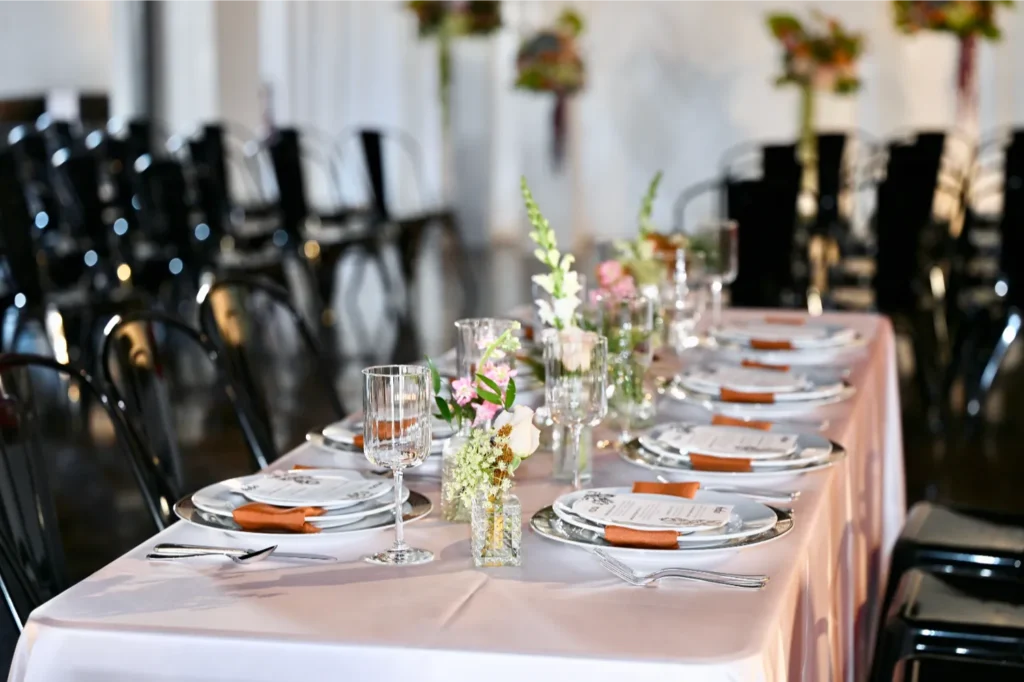
“Industrial-modern venues, like Radius, are incredibly photogenic because they function as a beautiful neutral canvas. They often feature interesting architectural details, clean lines, and textured elements but the overall palette remains neutral. This allows you to fully design the space around your wedding color scheme and vision without worrying about clashing colors. A lot of couples don’t always consider how a venue’s existing colors impact their photos. For example, dark red carpet or heavily colors walls can reflect onto skin tones and create unwanted color casts.”
Many couples overlook this major factor when choosing a venue: Does it match your wedding vision and color scheme?
The good news? Radius is perfectly neutral!
Capturing Beautiful Photos—Even After Dark
Once the sun sets, your photographer’s expertise becomes even more important.
“Your wedding photographer should be highly skilled in lighting, regardless of their photography style. Low light receptions are common and an experienced photographer will come prepared with professional lighting equipment to properly illuminate the space,” explains Jasmine.
“The way that lighting is used will depend on your photographer’s style. As a light and airy photographer, I intentionally make sure that not only my subjects but also the background are lit so the space doesn’t fall into darkness behind you. This keeps images bright, balanced, and true to color. On the flip side, a dark and moody photographer may prioritize dramatic shadows and allow the background to stay darker to fit their aesthetic.”
Natural vs. Posed: Finding the Right Balance
Many couples say they want candid photos…but what does that actually mean?
“If you are drawn to natural, candid images, look for a photographer whose work leans into a photojournalistic style. Photojournalism prioritizes real moments and genuine emotion. That said, most couples don’t really want 100% candid coverage. Many of those effortless looking images you see still include subtle posing direction and intentional setup to ensure you look your best.Choosing a photographer who has a mix of photojournalistic and traditional photo styles will give you the best of both worlds and will help your wedding images look timeless throughout the ages.”
Behind the Scenes: What Couples Don’t Always See
There’s much more to wedding photography than the wedding day itself.
“Most couples assume their photographer simply shows up, photographs the wedding, and delivers the images, but in reality, the wedding day itself is just a small portion of their work. The majority of a photographer’s time is spent behind the scenes preparing timelines, coordinating logistics, communicating with couples, backing up files, editing thousands of images, and delivering a polished final gallery. Shooting the wedding is just one small piece of a much larger puzzle to ensure your images are consistent and that you have a stress-free experience.”
How to Get the Best Possible Wedding Photos on Your Big Day
At the end of the day, great wedding photos come down to collaboration and trust.
“Communication and trust go a long way! Be open about your priorities, must have photos, and any concerns.
Trust is also just as important. Sometimes I may suggest a portrait location that doesn’t immediately look ‘pretty’ but I’m choosing it because it has amazing light. Light is everything in photography. When you trust your photographer’s eye and expertise, you’ll have stunning photos.”
And perhaps the most important reminder:
“Perfect wedding photos happen when light + trust + love come together.”
Why Timeless Wedding Photography Will Always Outlast Trends
With trends constantly evolving, it can be tempting to chase what’s popular, but timeless imagery will always stand the test of time.
“Some current trends include intentional motion blur, titled compositions, and late-night direct flash images. While these can be fun and creative, trends tend to date photos quickly. Think about selective color images from the early 2000’s. When you see one now, you instantly recognize the era. The same can happen with any trendy photography styles. Instead of choosing a photographer based on what’s trending, I always encourage couples to look for timeless imagery. Clean, well lit, true to color photos will feel just as beautiful decades from now as they do today.”
Learn More
To view more of Jasmine’s work or get in touch:
Whether you’re just starting your planning process or finalizing the details, remember: your photos are shaped long before the camera comes out. With the right timeline, thoughtful lighting, and a venue designed to support it all, your wedding day can be captured exactly as it felt—beautiful, effortless, and completely unforgettable.